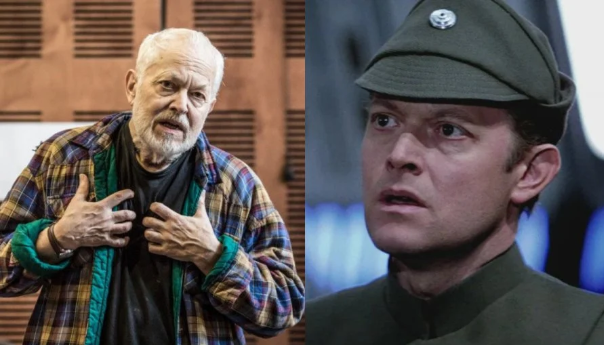
Michael Pennington death news broke on Sunday, May 10, 2026, casting a long shadow over both the world of British theatre and the passionate global community of Star Wars fans. The acclaimed English actor was 82 years old. His representatives confirmed the passing to the BBC the following day, though no official cause of death was disclosed.
For millions of moviegoers, Pennington will forever be the stone-faced Imperial commander who squared off with Darth Vader in one of cinema’s most beloved franchises. But those who truly knew his work understood that his greatest performances never took place on a film set — they happened under the bright lights of a stage.
Credit: https://www.youtube.com/@knowyourcelebrities8729
Michael Pennington Death: A Life That Began in Cambridge
Born Michael Vivian Fyfe Pennington on June 7, 1943, in Cambridge, England, he grew up in London with a hunger for literature and performance that never left him. He attended the prestigious Marlborough College before earning a place at Trinity College, Cambridge, where he read English — a fitting foundation for a man who would go on to dedicate his life to Shakespeare.
Fresh out of university, Pennington joined the Royal Shakespeare Company in 1964, stepping onto some of Britain’s most revered stages almost immediately. His early screen work arrived the following year with a supporting turn in the BBC miniseries The War of the Roses, but the stage was always his spiritual home.
His television and film career quietly expanded through the 1960s and ’70s, culminating in his first notable screen role as Laertes in the 1969 film adaptation of Hamlet, directed by Tony Richardson and featuring a young Anthony Hopkins. The role was a sign of things to come for a performer who would make Shakespeare his lifelong calling card.
From Shakespeare to a Galaxy Far, Far Away
Whatever one thinks about the relative weight of stage versus screen, there is no question that a single scene in a 1983 blockbuster introduced Michael Pennington to a worldwide audience overnight. Cast as Moff Tiaan Jerjerrod — the Imperial officer tasked with overseeing construction of the second Death Star — he appeared in Star Wars: Episode VI – Return of the Jedi opposite David Prowse’s Darth Vader.
The moment Vader’s shadow fell across Jerjerrod and the commander coolly responded, “I assure you, Lord Vader. My men are working as fast as they can,” a piece of pop culture history was made. Decades later, fans still celebrated that quiet, chilling exchange at conventions around the world.
Pennington himself was characteristically self-deprecating about it. He once told an interviewer he felt he had overacted in the role and couldn’t even fully recall the plot — adding with dry wit that the entire cast had essentially worked for next to nothing. Yet he acknowledged the film gave him a kind of international recognition that his theatre career, brilliant as it was, simply could never have replicated. For celebrity news followers and Star Wars die-hards alike, that one performance cemented his place in entertainment history.
The English Shakespeare Company and Michael Pennington’s True Legacy
If the news of Michael Pennington death prompted grief in the Star Wars fandom, it prompted outright mourning inside the world of British theatre. In 1986, alongside director Michael Bogdanov, Pennington co-founded the English Shakespeare Company — an organization built on the radical idea of bringing ambitious, full-scale Shakespeare productions to audiences far beyond London’s West End.
As Joint Artistic Director until 1992, he performed and directed productions that toured nationally and internationally, tackling roles such as Richard II, Henry V, Macbeth, Coriolanus, and Leontes. He earned two Olivier Award nominations during this era, a testament to the critical esteem in which his classical work was held.
His ties to the Royal Shakespeare Company never fully dissolved either. He was eventually honored as an Honorary Associate Artist — a distinction that acknowledged not just his performances but his decades of contribution to keeping classical theatre alive and evolving. In April 2004, he delivered the British Academy’s annual Shakespeare Lecture, becoming only the second person to do so since Harley Granville-Barker in 1925. He wrote ten books on acting and Shakespearean interpretation, works that continue to be studied in drama schools across the UK and beyond.
Beyond Shakespeare, his screen work included a memorable turn as British politician Michael Foot opposite Meryl Streep’s Margaret Thatcher in the 2011 biographical drama The Iron Lady. He also appeared in The Tudors, Waking the Dead, and provided voice work for the sci-fi series Raised by Wolves in 2022 — one of his final professional credits. Explore more tributes and profiles of iconic performers in our trending entertainment stories.
Michael Pennington Death and the Personal Life He Kept Quiet
Despite a career lived so publicly on stage and screen, Pennington was famously private about the people he loved. He married fellow actress Katharine Barker in 1964, the same year he first joined the RSC. The two worked together briefly within the company before the relationship broke down, and they divorced in 1967 after just three years. Their union produced one child — a son named Mark, who remains Pennington’s sole immediate surviving family member.
In the years that followed his divorce, Pennington entered a long and devoted partnership with arts administrator Prue Skene. The two were together for more than five decades, a quiet and enduring bond that outlasted most of the theatrical world’s more turbulent romances. Prue Skene passed away in March 2025, leaving Pennington to grieve the loss of his longest companion. He died just over a year later, in May 2026.
The loss of Prue and then Michael himself within such a short span has made the news of Michael Pennington death feel especially poignant to those who knew them both. He is survived by his son Mark.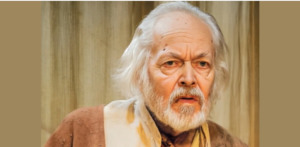
Tributes Pour In Following Michael Pennington Death
Word spread quickly across social media once the announcement was confirmed. Fans of the Star Wars saga flooded tribute threads with phrases like “May the Force be with you” and “Rest in peace to one of the Empire’s finest commanders.” Meanwhile, the theatre community’s response was perhaps even more heartfelt — recognizing the full magnitude of what had been lost.
The Royal Shakespeare Company issued a tribute honoring his extraordinary contributions to classical performance. Actress Miriam Margolyes was among those publicly acknowledging his passing. Colleagues recalled his stage presence, his generosity as a collaborator, and his near-unrivaled understanding of Shakespeare’s language.
You can view his full filmography and career credits on his official IMDb profile.
FAQ: Michael Pennington Death — What Fans Are Asking
How did Michael Pennington die?
As of the time of writing, no official cause of death has been released. His representatives confirmed to the BBC that he passed away on Sunday, May 10, 2026, at the age of 82.
What was Michael Pennington’s most famous role?
To mainstream audiences, he is best remembered as Moff Jerjerrod, the Death Star commander in Star Wars: Episode VI – Return of the Jedi (1983). Within the world of theatre, however, he was celebrated as one of Britain’s foremost Shakespearean performers, with landmark turns in Hamlet, Macbeth, and King Lear.
Did Michael Pennington have children?
Yes. He had one son, Mark Pennington, from his brief marriage to actress Katharine Barker in the 1960s. Mark is his only surviving immediate family member following the death of Pennington’s longtime partner Prue Skene in March 2025.
What was the English Shakespeare Company and why did Michael Pennington start it?
Pennington co-founded the English Shakespeare Company in 1986 with director Michael Bogdanov, driven by a desire to take large-scale, high-quality Shakespeare productions out of London and make them accessible to broader audiences across the UK and internationally. He served as Joint Artistic Director until 1992 and later described it as one of his proudest professional achievements.
Conclusion
The news of Michael Pennington death closes the chapter on a career that spanned more than six extraordinary decades. He commanded Imperial officers on the silver screen and Shakespearean kings on the stage — a rare combination that few actors could ever claim. His son Mark carries forward his memory, and the countless students, actors, and theatre lovers shaped by his books and performances carry forward his legacy. What did Michael Pennington mean to you — the Moff, the stage titan, or both? Drop a comment below and let us know.