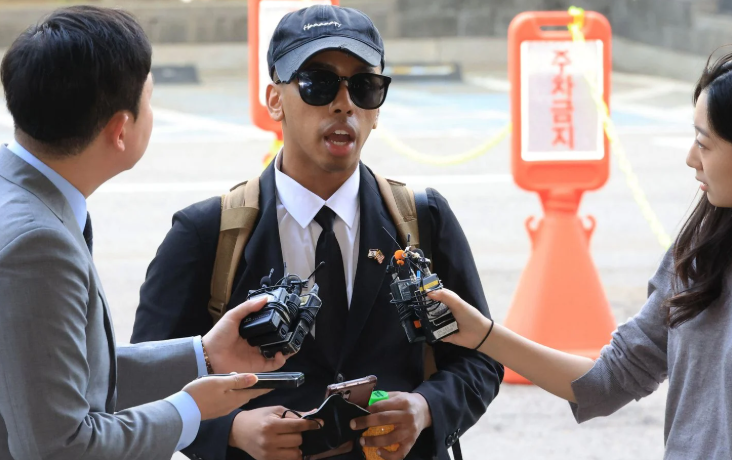
Johnny Somali sentenced South Korea — those four words are now official, and the internet is losing its mind over it. On April 14, 2026, the Seoul Western District Court handed down a six-month prison sentence with hard labor to the controversial American livestreamer, whose real name is Ramsey Khalid Ismael. Guilty on every single count. No exceptions. The verdict closes the chapter on one of the most-watched influencer court cases the world has ever seen — and it’s every bit as dramatic as you’d expect.
If you’ve somehow missed the backstory, buckle up. This one has everything: a sacred memorial, international outrage, deepfake videos, a former Navy SEAL, and a mom begging a court for mercy on her son’s behalf.
Credit: https://www.youtube.com/@KOREANOWyna
Why Was Johnny Somali Sentenced in South Korea?
The trouble started in October 2024 when Ismael filmed himself kissing and performing a provocative lap dance against the Statue of Peace — a bronze memorial in Seoul’s Yongsan District that honors the tens of thousands of Korean women forced into sexual slavery by Japanese Imperial forces during World War II. He streamed it live. The backlash was instant and ferocious.
Known online as a self-described internet troll, the 25-year-old Phoenix, Arizona native had already racked up a reputation for causing chaos in Japan and Israel before setting foot in South Korea. But his Seoul stunts were something else entirely. Beyond the statue incident, he was caught blasting North Korean anthems in convenience stores, vandalizing a Seoul shop in the Mapo district, blocking theme park riders at Lotte World, and broadcasting offensive audio in packed public spaces.
South Korean authorities weren’t amused. Prosecutors indicted him in November 2024, slapped him with an exit ban, and then — as the trial progressed — added an even heavier charge: distributing an AI-generated deepfake sexual video featuring himself and a local female content creator.
Johnny Somali Sentenced South Korea: What the Court Actually Decided
The Seoul Western District Court found Ismael guilty on all seven charges brought against him. That includes multiple counts of obstruction of business, violations of the Minor Offences Act, and the deepfake distribution charge he fought the hardest — and lost. Judge Park Gee-won made it crystal clear in the ruling that the evidence left no room for doubt.
“The defendant repeatedly committed crimes against unspecified members of the public to generate profit via YouTube,” the court stated, noting he acted in complete disregard of Korean law. The sentence: six months in prison with mandatory hard labor, plus an additional 20 days of detention. He was taken into custody immediately after the verdict was read.
On top of the prison time, Ismael faces a five-year ban from working at any institution that serves minors or people with disabilities once he’s released. His phone will be confiscated during his incarceration, effectively cutting him off from the streaming world entirely. For someone whose entire career depends on a live audience, that’s a brutal consequence.
For more on how social media personalities are facing real-world legal fallout, check out our latest coverage in trending celebrity controversies making headlines right now.
The Comfort Women Statue — Why It Matters So Much
To understand why South Korea reacted the way it did, you have to understand what that statue represents. Historians estimate that as many as 200,000 women — the majority of them Korean — were forced into sexual servitude by Japanese military forces before and during World War II. The term “comfort women” is a sanitized euphemism for a system of institutionalized rape and human trafficking.
The Statue of Peace is not just a tourist landmark. It is a living symbol of national grief, survivor testimony, and ongoing diplomatic tension between South Korea and Japan. For Ismael to mock it on camera — and profit from that footage — struck a nerve that went far beyond internet drama. South Korea’s parliament took notice. The public mobilized. At one point, a bounty was reportedly placed on his location by enraged citizens, and a former Korean Navy SEAL-turned-YouTuber tracked him down and knocked him out in a confrontation that itself went viral.
You can learn more about the historical significance of comfort women memorials via Wikipedia’s detailed entry on comfort women.
The Deepfake Charge That Changed Everything
As messy as the public nuisance charges were, the deepfake allegation transformed the case into something far more serious. Prosecutors alleged that Ismael had distributed AI-generated explicit content featuring himself and a real Korean female YouTuber without her consent. He maintained his innocence on this charge throughout the trial, at one point arguing to the judge that a Korean streamer named Bongbong had shared the same videos and faced zero consequences.
That argument did not go over well. The judge was visibly unimpressed. According to legal commentator and trial documentarian Legal Mindset, Ismael’s courtroom attitude showed little genuine remorse — despite what he said to reporters outside. The court rejected every defense argument tied to the deepfake charge and found him guilty. South Korea’s Special Act on Sexual Violence Crimes takes AI-generated non-consensual content extremely seriously, and this case may well set a precedent for how foreign influencers are prosecuted going forward.
Prosecutors had originally pushed for three years of hard labor. His mother submitted a formal petition to the court asking for leniency. In the end, six months was the number — significantly less than the prosecution sought, but still a landmark sentence in the world of content creator accountability.
Johnny Somali’s Prison Sentence: A Pattern of Global Chaos
South Korea isn’t the first country to make an example of Ismael. In 2023, he was detained in Japan after pulling similar stunts — trespassing on a construction site and cranking loud music inside a restaurant. He was fined the equivalent of roughly $1,400 USD. The following year, Israeli authorities briefly detained him after he livestreamed himself antagonizing locals. Neither experience appeared to slow him down.
He was eventually banned from Twitch, Kick, Rumble, and Parti — every major streaming platform he called home — for repeated violations of community standards. Yet the bans only seemed to fuel his notoriety. His South Korean saga, however, has finally produced consequences that neither a platform ban nor a fine can easily brush aside.
This kind of real-world reckoning for digital troublemakers is becoming a growing conversation across the entertainment world. Browse the full rundown of similar stories on our celebrity news section for more cases where fame and accountability collide.
What Happens Next After Johnny Somali Is Sentenced in South Korea?
Ismael is currently behind bars in a South Korean labor prison facility. Whether he will appeal the verdict remains unclear at the time of writing, though legal experts suggest his prospects are limited given the court’s comprehensive guilty verdict across all charges.
When he does eventually walk free — six months from sentencing — he’ll re-enter the world with a criminal record, an employment ban, and a global reputation that makes it difficult to imagine a clean comeback. Whether streaming platforms would allow him back is another question entirely.
For now, the internet troll who thought the world was his content playground has learned, the hard way, that some countries don’t treat provocations as punchlines.
Frequently Asked Questions
Why was Johnny Somali arrested in South Korea?
Johnny Somali, whose legal name is Ramsey Khalid Ismael, was arrested in South Korea for a series of offenses captured on his livestreams. These included performing lewd acts near the Statue of Peace — a memorial to wartime sexual slavery victims — causing disturbances in public spaces, vandalizing a convenience store, and distributing AI-generated non-consensual sexual content featuring a local Korean creator.
How long is Johnny Somali’s prison sentence in South Korea?
The Seoul Western District Court sentenced him to six months in prison with mandatory hard labor, along with an additional 20 days of detention. He was taken into custody immediately after the April 14, 2026 verdict and will serve his time at a specialized labor prison facility in South Korea.
What is the comfort women statue that Johnny Somali disrespected?
The Statue of Peace is a bronze monument erected to honor the estimated 200,000 women — predominantly Korean — who were forced into sexual slavery by Japanese Imperial forces during World War II. The memorial is considered deeply sacred in South Korea and remains a flashpoint in ongoing diplomatic relations between South Korea and Japan.
Was Johnny Somali found guilty of all charges?
Yes. The court found him guilty on all seven charges, including the deepfake distribution charge he had pleaded not guilty to. The ruling covered violations of the Minor Offences Act, multiple obstruction of business counts, and the AI-generated sexual content allegation — making it a complete victory for prosecutors.
Final Thoughts
The Johnny Somali sentenced South Korea verdict isn’t just tabloid fodder — it’s a genuine inflection point in how the world deals with influencers who treat other cultures as content. A six-month prison sentence with hard labor sends a message that no follower count can shield you from the consequences of deliberate disrespect. Whether other creators take note remains to be seen, but for now, this chapter is officially closed — with bars on the windows.
What do you think about the sentence — fair punishment or too lenient? Drop a comment below and let us know where you stand.